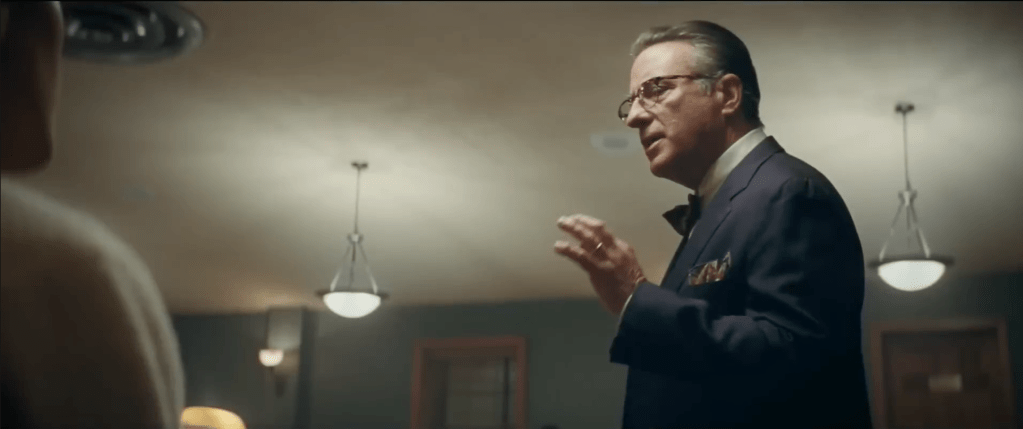
For the first episode of the revived TDC2C series — the online cinematography conversations of Terre di Cinema — we invited Pierluigi “Gigi” Malavasi AIC, an Italian cinematographer working between Los Angeles and Italy. Speaking from a film set in Rome, Gigi walked us through his experience shooting Miranda’s Victim – US, 2023, directed by Michelle Danner, featuring a stellar cast including: Luke Wilson, Ryan Phillippe, Andy Garcia, Donald Sutherland and Kyle MacLachan, now streaming on Hulu – his approach to lighting and lenses, and why shooting on film remains not just relevant, but foundational for the next generation.
Below is a curated and edited version of the conversation between Vincenzo Condorelli AIC and Gigi Malavasi AIC.
INTERVIEW
Vincenzo Condorelli:
Gigi, thank you for joining us in the middle of a shoot. Let’s start from the beginning: your journey from Italy to Los Angeles, and now back again.
Pierluigi Malavasi:
I was lucky — my father loved photography and bought me my first camera when I was eight. I grew up in Ferrara, started making short films, and eventually joined an exchange program during high school. I asked my father if I could go to San Francisco to study film. He said yes.
After that I moved to Los Angeles and attended the Los Angeles Film School in 2003–2004. It was a great program, lots of shooting on film — exactly what I wanted. I fell in love with the process. What seemed incredibly complex at first now feels instinctive.
In the last two years I’ve slowly begun to return to Italy. The crews are wonderful, the work is strong, and it feels like the right time to shoot more here. I’m now in Rome finishing my second feature shot in Italy.
V.C.:
Let’s move to Miranda’s Victim. When the director Michelle Danner approached you, why did you both decide to shoot on 35mm?
P.M.:
Michelle and I had already made two films together. She loves film, but on our previous project the budget didn’t allow it. On Miranda’s Victim, with a budget around $50 million, I said: “Michelle, we should at least try.” She immediately agreed.
We talked to Kodak, ran numbers, spoke with the lab in New York, and within a few weeks production approved shooting 35mm. Originally I suggested 2-perf to save stock, but Michelle insisted: “If we’re shooting 35, we’re shooting full frame.” And that was that.
V.C.:
For our younger filmmakers — could you explain the difference?
P.M.:
Sure.
4-perf 35mm uses the full height of the negative, originally intended for a 1.33 image. When you shoot widescreen, you crop top and bottom.
2-perf is a widescreen native format that uses half the height — saving nearly half the stock — but with a different texture and grain.
Both are beautiful. But Michelle wanted the full negative, and I’m glad we did it.
V.C.:
Once 35mm was approved, what did pre-production look like?
P.M.:
Fast — only six weeks.
We scouted locations, shot-listed with Michelle, assembled the camera crew from New York, and I had just one day of testing. So I prepared a “mini short film” as a test: interiors, exteriors, silhouettes, clean looks, aggressive looks — everything.
I read all the Kodak interviews with cinematographers shooting Vision3. It had been five years since I last shot 5219, so I refreshed myself. In the end I kept it simple: one stock only — 500T 5219 — for the entire movie.
For lenses I chose Cooke Anamorphics — classic, cinematic, clean, and I prefer shaping with lighting rather than extreme lens character.
No filtration other than NDs. No diffusion. The texture of film + anamorphic gave me everything I needed.

V.C.:
Explain your dailies and scanning pipeline — it’s useful for our community, especially the new generation.
P.M.:
We would shoot during the day; our loader would pack the exposed stock each evening. A driver took it to New York, where it was processed and scanned overnight.
We shot film, but the scans were 4K LogC RAW — so the digital files behaved very similarly to Alexa LogC in post. Every morning at lunch we received the dailies. The lab emailed: “No issues to report.” That first sentence can change your day!
We created a base look during tests, and the dailies colorist maintained it. It was a very smooth process. I actually prefer this delayed relationship with the image — not being glued to a monitor tweaking looks on set.
V.C.:
Speaking of on-set workflow — how did you operate?
P.M.:
I used a light meter, always. I looked through the optical viewfinder — I didn’t want to depend on video taps or monitors. We shot on ARRICAM LT, which has excellent modern video taps, but I used them mainly for continuity and framing review, not exposure.
I love making decisions with my eyes, not with a waveform.
V.C.:
Let’s discuss lighting. Your work on Miranda’s Victim feels restrained and naturalistic.
P.M.:
That was intentional.
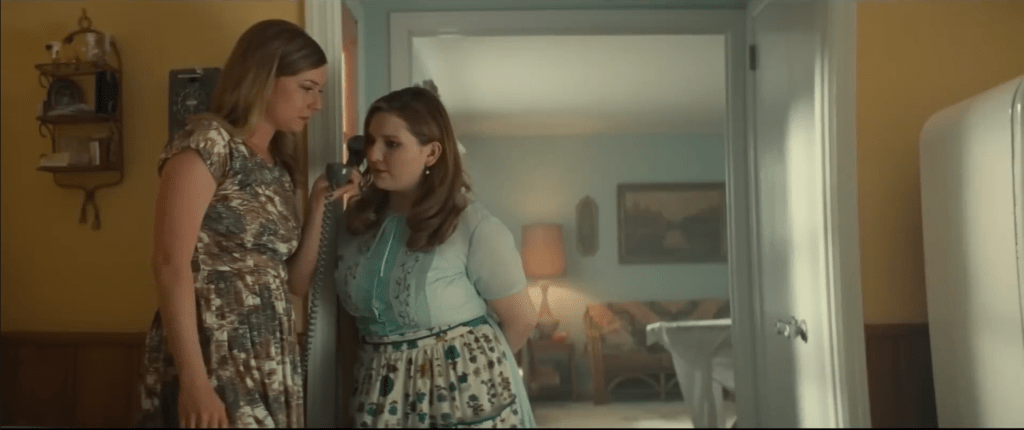
I didn’t want a “showy” cinematography — the story is delicate, rooted in the 50s–70s, and I wanted authenticity and simplicity.
I used mostly single-source lighting, emphasized practicals, and relied heavily on location choice. Location scouting is, honestly, one of the most important things in cinematography.
I used sodium vapor looks for exteriors when appropriate, minimal moonlight, and avoided overcomplicating setups. Some scenes were lit almost entirely with a single source through a window.
And yes — a lot of negative fill. Big ones: 20×20, 30×30 when possible. I shape with subtraction more than with addition.
V.C.:
Your T-stops were surprisingly classic — around T5.6. Why?
P.M.:
Because cinema is meant to be seen.
Shooting wide open all the time — T1.4, T2 — looks fashionable, but often it takes away a narrative tool. Depth of field should be storytelling, not just style.
At T5.6 the focus puller can do their job, the actors stay visible, and the image has depth.
Wide open has its place — but it shouldn’t be the default.
V.C.:
How did the actors respond to shooting on film?
P.M.:
They were thrilled. Some didn’t know we were shooting 35mm until they arrived on set. Emily VanCamp walked in, saw the Arricam on a Scorpio head, and said: “Are we shooting 35? I’m so happy.”
There’s a sense of seriousness, of craft, when actors know the camera is rolling real film. It creates trust and focus. Long scenes were intense — sometimes 10 minutes. We coordinated carefully to avoid interrupting emotional moments for a magazine change.
V.C.:
Looking at the bigger picture: why does film still matter today?
P.M.:
Because film is the foundation of everything we do.
It’s tactile, emotional, imperfect in the best possible way. It gives me a result I connect with instantly.
Ironically, we’ve spent the last 15 years trying to make digital look like film — adding grain, reducing sharpness, adding halation — so at a certain point you ask: Why not just shoot film?
For me, shooting film is easier. It comes more naturally. It forces preparation, discipline, and collaboration — 10 people around a camera making something together. That process is irreplaceable.
V.C.:
A last message for young cinematographers?
P.M.:
Try film at least once.
Not because it’s nostalgic — but because it teaches you everything: discipline, intention, and trust in your own eye.
Film is not dead, and it won’t die as long as new filmmakers keep discovering it.
Conclusion
Our conversation with Gigi Malavasi reaffirmed something central to the mission of Terre di Cinema: that film is not just a medium — it’s a process, a discipline, and a way of seeing.
We thank Gigi for opening this new season of TDC2C and for sharing his insight with our community. You can read The Guardian’s review of Miranda’s Victim at this link:

Scopri di più da TERRE DI CINEMA - International Cinematographers Days
Abbonati per ricevere gli ultimi articoli inviati alla tua e-mail.
