An interview with Vincenzo Condorelli AIC, Founder of Terre di Cinema on craft, imagination, discomfort, and why human intelligence remains central to cinema in the age of AI.
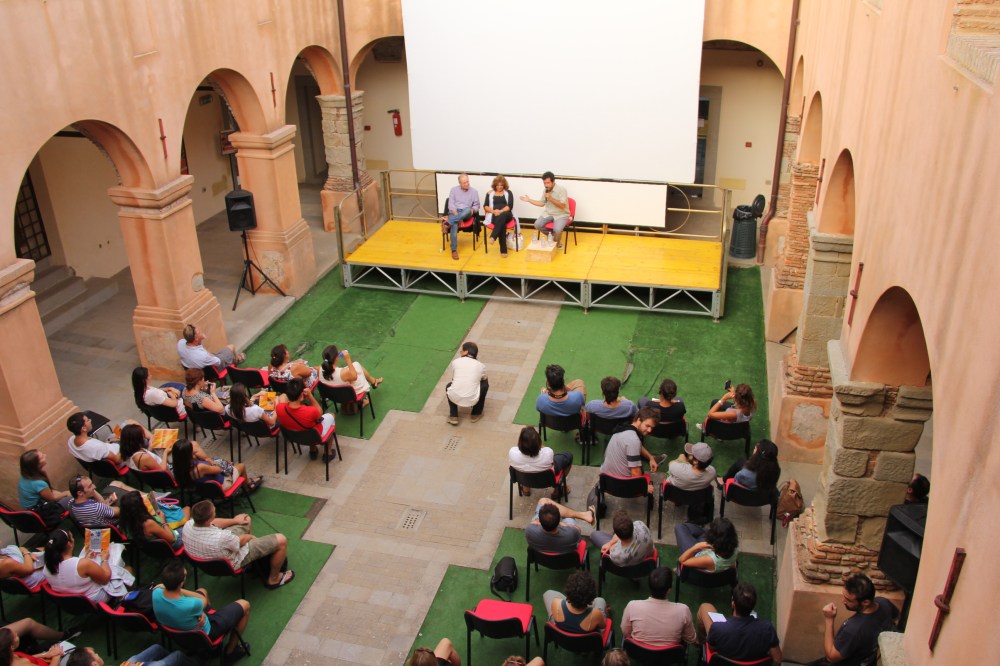
Q: Terre di Cinema is often identified with the CineCampus. How would you explain the difference between the two?
A:
Terre di Cinema is a broader cultural and educational project, while the CineCampus is its core and most intensive expression. Over the years, Terre di Cinema has taken many forms: it has been a film festival and a space for retrospectives, a platform for book presentations and a showcase of new cinematographic technologies, a host for thematic workshops, and a place for photographic exhibitions. All these activities share the same underlying idea: opening up the filmmaking process and creating a space where cinema can be understood through its craft, its tools, and the people who make it.
The CineCampus represents the heart of this vision. It is an international, immersive film residency in which emerging directors and camera persons live and work together, sharing a rigorous, hands-on experience that culminates in the production of films shot on photochemical film. If Terre di Cinema is the ecosystem — a place of encounter, reflection, and exchange — the CineCampus is where everything converges into practice, discipline, and collaboration.

Q: Terre di Cinema has always had a strong international vocation. Where does this emphasis on cultural exchange come from?
A:
It comes very naturally from my own life and professional experience. I am an expatriate, working in a country that welcomed me with great generosity—a place I have had the privilege to discover and understand through the camera. Living and working across cultures has profoundly shaped the way I see cinema and its role in the world.
I strongly believe in cultural exchange, not as a slogan, but as a concrete, transformative practice. Cinema is one of the most powerful tools we have to cross borders—geographical, linguistic, and cultural—and to create shared ground where differences become a source of richness rather than division.
That is why I am particularly proud that every year, at Terre di Cinema, collaborations are born across countries and continents. These are not superficial encounters limited to the duration of the CineCampus; many of them continue over time, turning into lasting professional relationships and long-term creative partnerships. In that sense, the international nature of Terre di Cinema is not simply a feature of the programme—it is one of its core values, and one of its most meaningful outcomes.
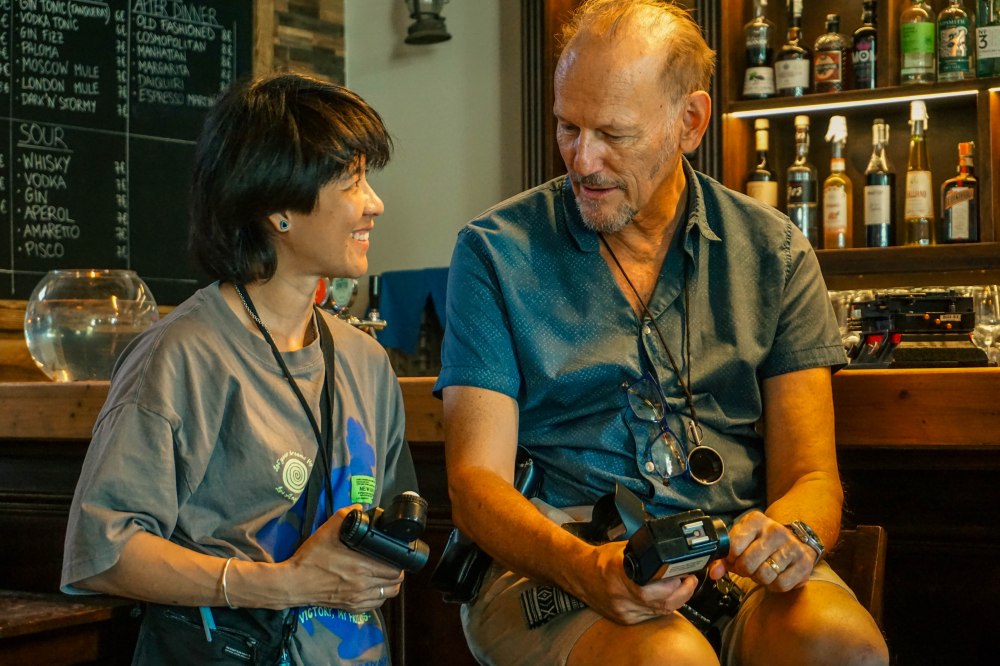
Terre di Cinema is also built on a strong team and long-term collaborations. How important is the human and professional structure behind the CineCampus?
A:
It is absolutely central. Terre di Cinema is not the result of a single vision, but of a shared one, sustained over time by people who believe deeply in this project and contribute to it with continuity, responsibility, and generosity.
A cornerstone of this structure is the partnership between the Associazione Italiana Autori della Fotografia Cinematografica and the BVK – Bundesverband Kinematografie, which we have developed through the CineCampus since 2021. This collaboration has given Terre di Cinema a truly European dimension, grounded in dialogue between different professional cultures and shared pedagogical values.
Within this framework, I would especially like to mention my colleague Johannes Kirchlechner, who has been the Cinematographer Supervisor of the CineCampus since 2021. His role has been fundamental in shaping the photographic supervision of the programme and in accompanying participants through an extremely demanding creative and technical process.
A very special mention also goes to the Sicilian team of Terre di Cinema. First and foremost, the cinematographer Prema Franceschini, who coordinates the entire, highly complex production logistics of the short films. Together with his collaborators, he carries out an extraordinary amount of work with unique passion, precision, and dedication. Their commitment is one of the key reasons why Terre di Cinema functions at the level it does, something that is truly unique in the world.

Terre di Cinema and its CineCampus turn fifteen this year. Looking back to the very beginning, what was the original idea behind the first edition in 2011?
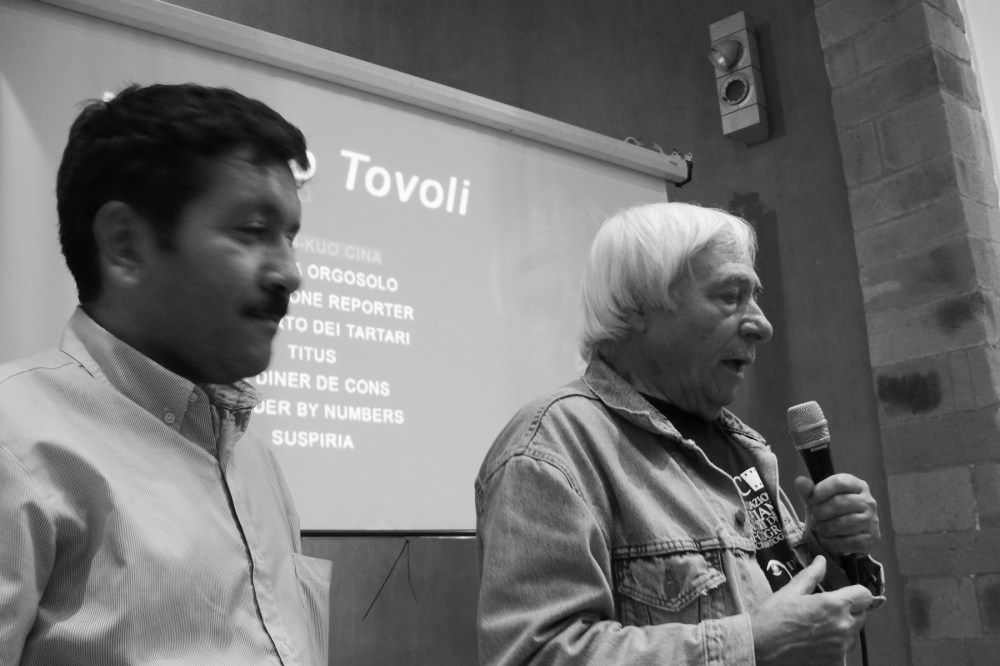
When Terre di Cinema was conceived in 2011, the original idea was to take up the legacy of an extraordinary experience that had taken place in L’Aquila between 1981 and 1990: Una Città in Cinema, created by Gabriele Lucci and Luciano Tovoli. I was deeply inspired by the way Una Città in Cinema placed craft, process, and collaboration at the center of its vision: from the construction of the image to the finished film, with professionals from all over the world — including many Academy Award winners — openly sharing their work, technologies, and experiences alongside students from numerous international film schools.
A second, equally important source of inspiration for our CineCampus came from my experience at the London Film School, where I trained in the MA in Filmmaking. In particular, I was influenced by the way the second-term film exercise was conceived under the guidance of former Head of Studies Alan Bernstein: an intensive, hands-on formula designed to produce a series of complete short films within a limited timeframe, with filmmakers rotating through all the main crew roles. This approach strongly favors the understanding of cinema as a collective, practice-based art form.
Q: Why did Terre di Cinema start in the village of Forza d’Agrò, in Sicily?
A:
Forza d’Agrò is a remarkably picturesque medieval hilltop village overlooking the Ionian Sea, but its significance goes far beyond its beauty. It is deeply connected to cinema history, having served as one of the principal Sicilian locations for The Godfather trilogy, as well as hosting shoots by renowned filmmakers such as Joseph Losey and Giuseppe Tornatore. From the very beginning, this strong cinematic heritage made it feel like a natural place to start.
At the same time, Forza d’Agrò was the perfect location for the early phase of Terre di Cinema because it allowed us to imagine cinema in a very concrete and evocative way. It is visually stunning, extremely photogenic, and offered a safe, contained environment in which to work. The village itself functioned as an open-air film set for our short films, while also providing a highly atmospheric setting for festival screenings and public events. That combination of strong visual identity, cinematic memory, and practical usability made Forza d’Agrò an ideal starting point for what Terre di Cinema was meant to become.
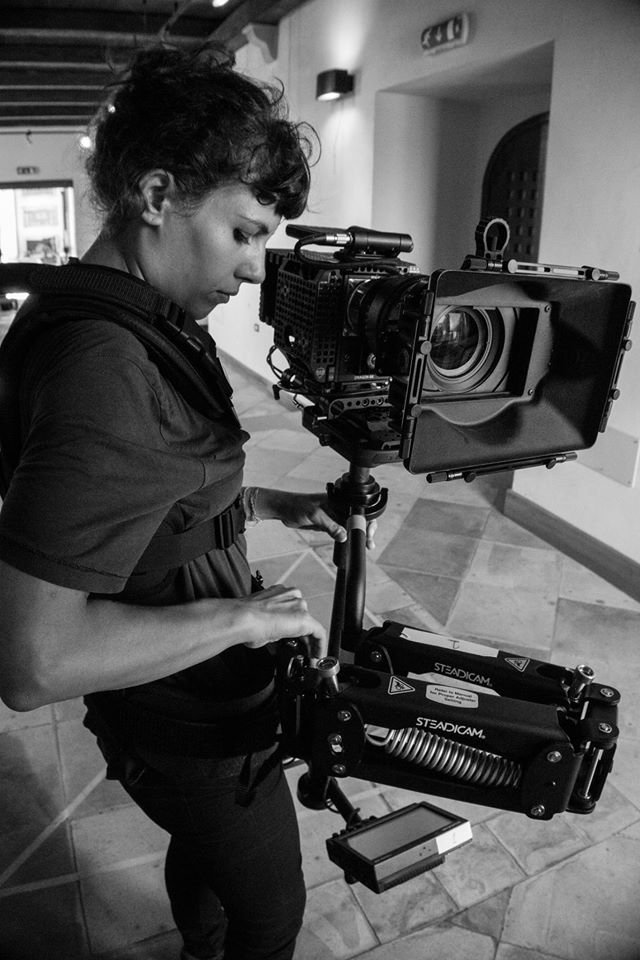
Q: The early editions of Terre di Cinema were strongly focused on Steadicam and camera movement. What attracted you to that specific language at the time, and how did it reflect the needs of cinematography in those years?
A:
One of the defining characteristics of the early editions, from 2011 to 2015, was that editing took place during the CineCampus itself. Participants would leave with finished versions of their short films that we screened to the public on the last night of Terre di Cinema. This had a strong impact on the kind of cinematic language we explored, and the immediacy of digital allowed us to shoot, edit, and refine work within the same intense timeframe.
The former Augustinian monastery in Forza d’Agrò, which served as our headquarters, effectively became a creative factory operating 24 hours a day: shooting, editing, reviewing, and discussing images almost without interruption.
I look back on those years with a certain nostalgia. Some moments remain absolutely indelible in my memory, like seeing Garrett Brown ASC floating majestically through the narrow streets of the village with his Steadicam, or the unforgettable midnight screening of Alejandro Jodorowski’s Santa Sangre, shared with its cinematographer Daniele Nannuzzi AIC. Those experiences captured the spirit of the early Terre di Cinema: intense, communal, experimental, and deeply rooted in the joy of making cinema together. I would also like to mention the fantastic support we received from Cartoni and Tiffen, who were the main brands involved in the CineCampus together with ARRI Italia and others. Then Cooke Optics arrived in 2016.

Q: In 2016, Terre di Cinema made a clear and decisive shift, dedicating itself fully to the mission of shooting on photochemical film. What led to that turning point, and why did film become a central, non-negotiable value for you?
A:
2016 was a genuine turning point, in many ways. It was also the first edition of Terre di Cinema held outside Forza d’Agrò, moving to Mount Etna — a place that feels profoundly like home to me, as I was born in Catania. That geographical shift mirrored an internal one. The initial suggestion to embrace film came from a dear friend and colleague, Matyás Erdély, and it arrived at a moment when the time truly felt ripe.
I had the sense that the values on which Terre di Cinema had been built — discipline, responsibility, craft, collaboration — could finally be fully realized through the choice to shoot on photochemical film. At the same time, I no longer felt it was essential to complete the short films during the days of the CineCampus itself. In fact, I became convinced of the opposite: it was better to give directors more time and flexibility after the shoot, and to focus our energies on what we do best — the act of filming. Film naturally encourages that focus. It demands preparation, presence, and intention, and it shifts attention back to the set, to the moment when images are truly born.
2016 was also a transitional year in a broader sense. It marked the last edition in which we organized a full-scale festival with daily public screenings. And it was the year we had the honor of hosting the first still photography workshop by the extraordinary Palermo-born photographer Letizia Battaglia, titled La Ricerca della Bellezza. That experience reinforced our belief in photography — moving or still — as an ethical and poetic act.
From the following year onward, film became our clear and unwavering commitment. We moved to Catania, where Terre di Cinema would remain until the 2023 edition, and photochemical cinema became not just a technical choice, but a cultural and educational stance.
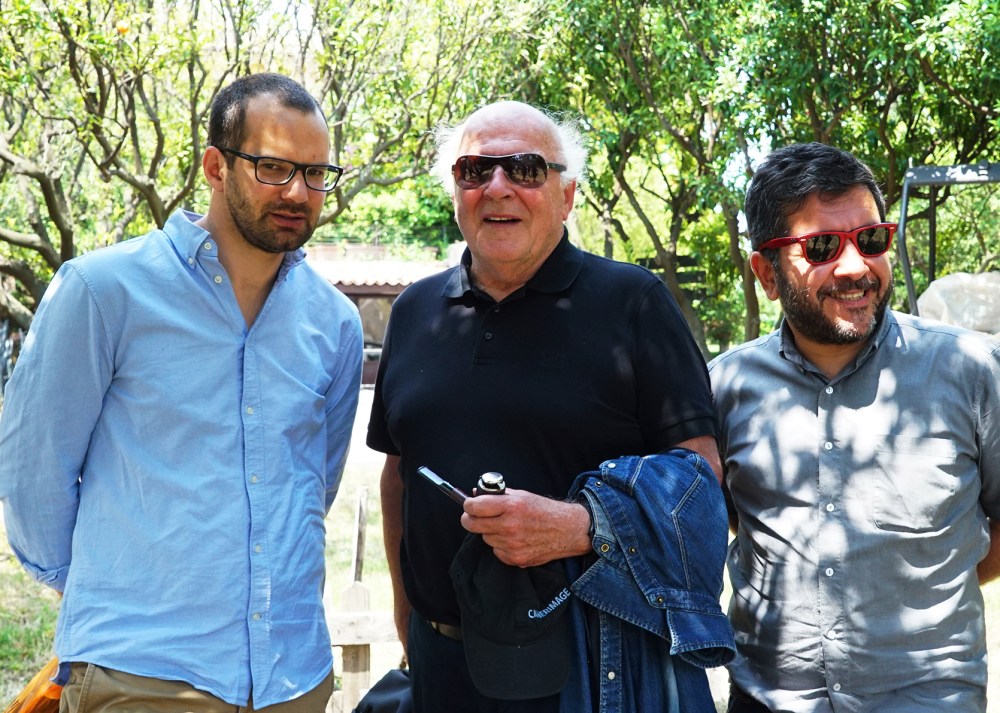
At that moment, digital cinema was rapidly becoming the industry standard. Choosing film could have seemed counter-current. What did you feel was at risk of being lost if film disappeared from education and practice?
A:
I come from a film-based background. I belong to a generation that learned its craft on photochemical film, had a great deal of fun experimenting with early video systems, and then transitioned quite naturally into an increasingly digital landscape. In that sense, I consider myself privileged. I was able to experience all these phases firsthand and to understand their strengths and limitations from within.
The generations that followed did not have that privilege. And yet, interestingly, film has experienced a genuine revival, particularly among young independent filmmakers. That tells us something important. I strongly believe that anyone who wants to become a cinematographer should have at least one direct experience with photochemical film. Shooting on film means developing the ability — and the imagination — to visualize something you cannot immediately see. You have to predict how the image captured on the negative will eventually appear. This act of previsualization is fundamental, not only for cinematographers but also for directors. In my view, it is precisely this capacity to imagine before seeing that makes a real difference in cinematic language.
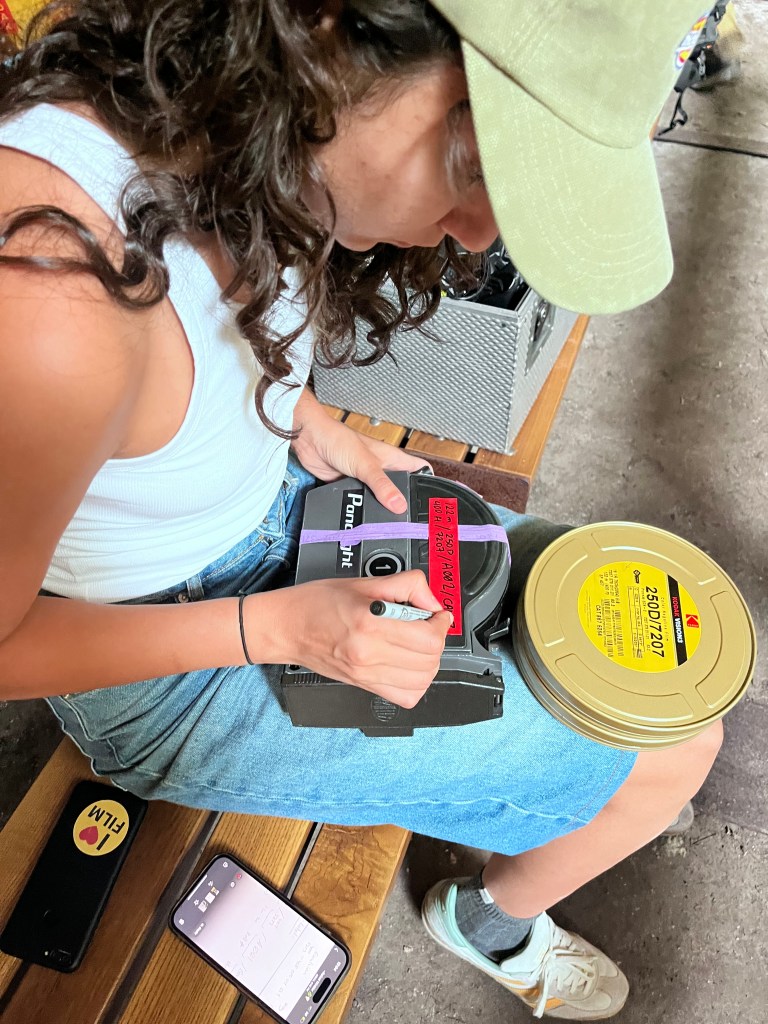
Thanks to the outstanding support of Kodak Motion Picture Films, This is the experience we want to offer to everyone who comes to Terre di Cinema — and much more around it. Choosing film also means recovering a tactile relationship with what we produce: hands on the negative, hands lacing a film camera. It restores an artisanal connection that is, in many ways, at the very core of human experience. That is why we put a lot of emphasis and work into specialized training for film camera operators. And it is worth remembering that for hundreds of thousands of years, we have built and used tools with our hands — from the earliest cave paintings onward. In recent years, so much of what we create has become intangible. We no longer touch what we produce; we interact mainly with keyboards and screens.
Working with film reintroduces, in every department, physicality, responsibility, and presence. It reminds us that cinema is not only an image on a monitor, but a material act — one that engages the body, the imagination, and the senses all at once.
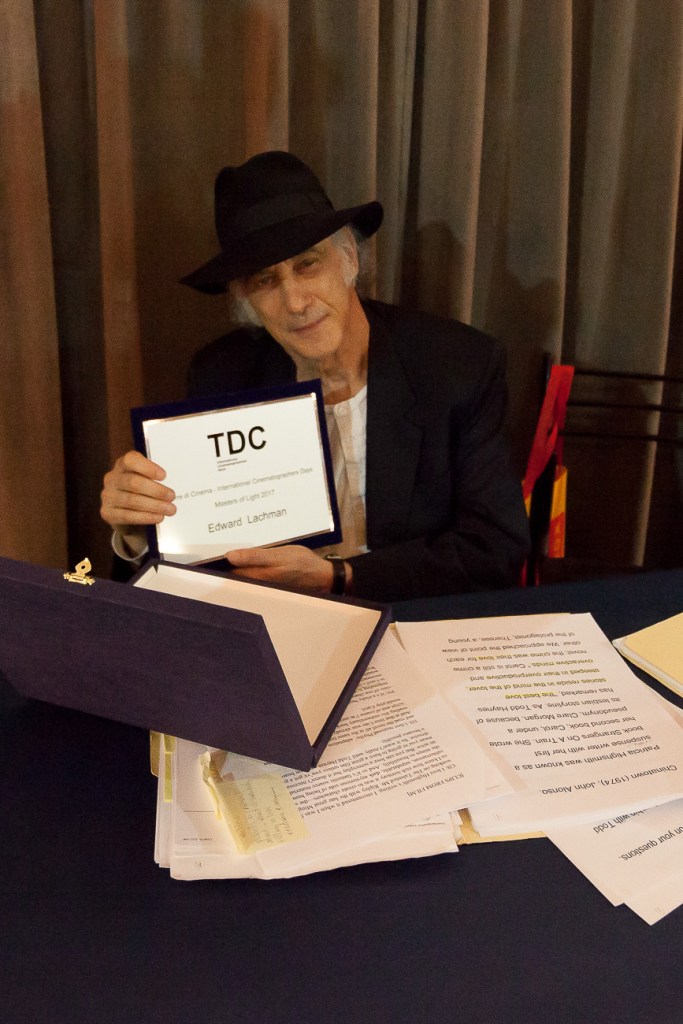
Is it precisely these principles—previsualization, authorship, and craft—that underpin the distinction you make within the CineCampus Camera Department between camera operators and cinematographers?
A:
Yes, very much so. The distinction is not bureaucratic, and it’s certainly not hierarchical—it’s pedagogical, practical, and also coherent with how the profession is structured in many countries. The CineCampus is an intensive, time-compressed environment: you arrive, you prepare, you shoot under real constraints, and you are constantly asked to make decisions with clarity and intention. In that kind of setting, if we don’t define roles properly, training becomes vague, diluted, and ultimately unfair to everyone.
Cinematography is fundamentally an authorial discipline. It is built on previsualization, on conceptual and visual strategy, on making choices that connect story, light, camera language, and production realities into one coherent vision. That means learning how to read a script visually, how to plan coverage, how to work with directors, how to shape light, how to anticipate what the negative will give back, and how to take responsibility for the image as a whole.
Camera operating, on the other hand, is a highly specialized craft with its own depth and its own language. It demands precision, physical intelligence, timing, rhythm, composition in motion, and a very refined sensitivity to performance and blocking—often in conditions where there is no second chance. It is not a “step below”; it is a discipline that deserves focused training, mentorship, and a protected space in which to develop.
Because the CineCampus is so intense, separating these tracks allows us to do justice to both. It ensures that cinematographers are truly trained to think, design, and lead the visual process—rather than simply “holding a camera”—and that camera operators are trained to master movement, framing, and execution at a professional level, rather than being asked to improvise a role that is not properly taught.
In practice, at TDC the two roles constantly interact: cinematographers define the visual intention and the photographic strategy; camera operators translate that intention into physical, precise, repeatable camera language. The separation exists so that this collaboration can be learned consciously—through a real division of responsibilities—rather than assumed. And ultimately, it reinforces exactly the principles we’ve been discussing: imagination before immediacy, craft before convenience, and cinema as a discipline that requires both vision and embodied skill.
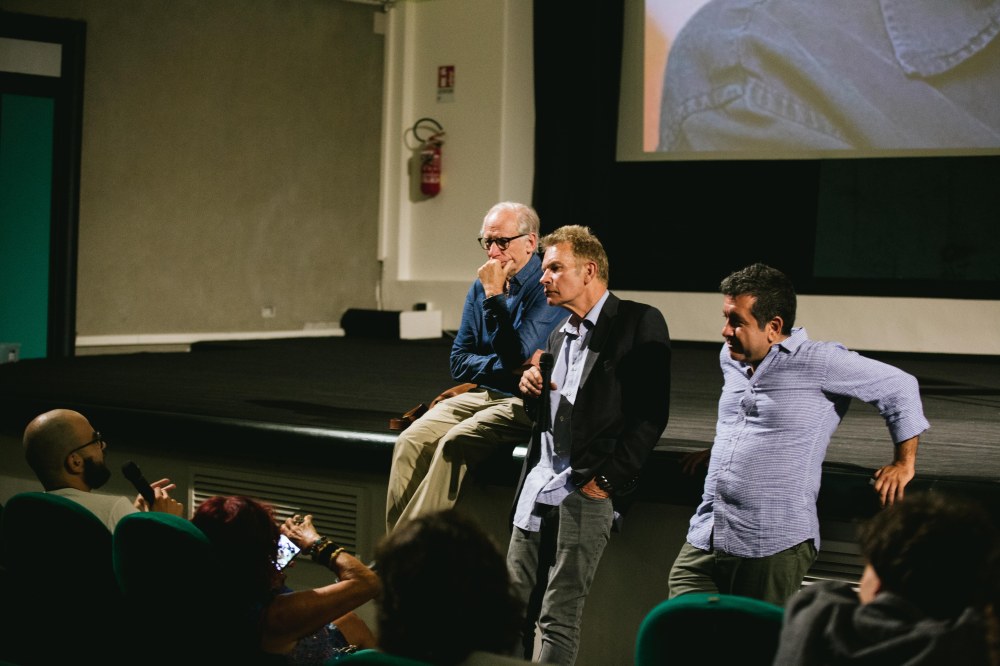
Q: What can you tell us about the move from Catania to Siracusa in 2024?
A:
Catania was a fundamental location for Terre di Cinema. It was where the CineCampus grew to the scale and structure it has today. I should be honest, though: in order for that growth to happen—given our limited resources—we made a conscious decision to sacrifice, at least temporarily, the festival component of Terre di Cinema. We chose to focus more sharply on the educational dimension of the CineCampus, and to reduce—or rather, optimize—the number of screenings, concentrating our efforts on special events and carefully curated projections.
I remember some of those moments with great emotion. The 35mm projector screenings at Cinema King in Catania, dedicated to masterpieces by Michelangelo Antonioni and Ermanno Olmi, in the presence of cinematographers Luciano Tovoli and Fabio Olmi, were truly special. Or the evening devoted to the director–cinematographer duo Julien Temple and Oliver Stapleton, with the screening of the cult film Absolute Beginners in the beautiful Art Nouveau setting of Cinema Odeon. Those events remain very vivid in my memory.
Overall, I strongly believe that reinforcing our focus on the educational aspect—rather than on a traditional festival format—has ultimately benefited the continuous growth and coherence of Terre di Cinema.
As for the move to Siracusa, beyond its breathtaking beauty and the organic collaboration we’ve built with institutions and important local partners, it represents a kind of synthesis. Siracusa combines the advantages of a small village—like Forza d’Agrò, with its intimacy, concentration, and strong sense of place—with those of a larger city, at least by European standards, such as Catania. It offers logistical flexibility, rich locations, and cultural depth, while still allowing us to maintain a focused, immersive environment. In that sense, Siracusa feels like a natural evolution—one that brings together different phases of Terre di Cinema into a single, balanced framework.
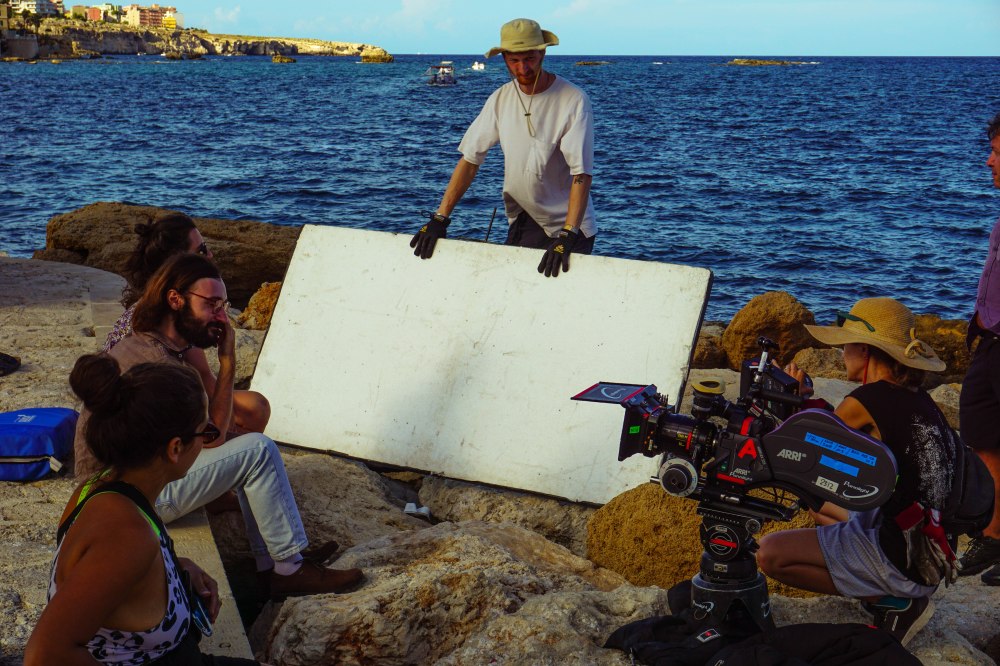
Speaking about the intensity of the CineCampus experience, for all departments involved, Carey Duffy—an old friend who has supported and taken part in Terre di Cinema since 2015, first with Tiffen and later with Cooke Optics—once said that at Terre di Cinema “we put the participants out of their comfort zone.” According to him, this is the secret behind such a successful formula, which in the 2025 edition welcomed as many as 48 young filmmakers from all over the world. What do you think?
A:
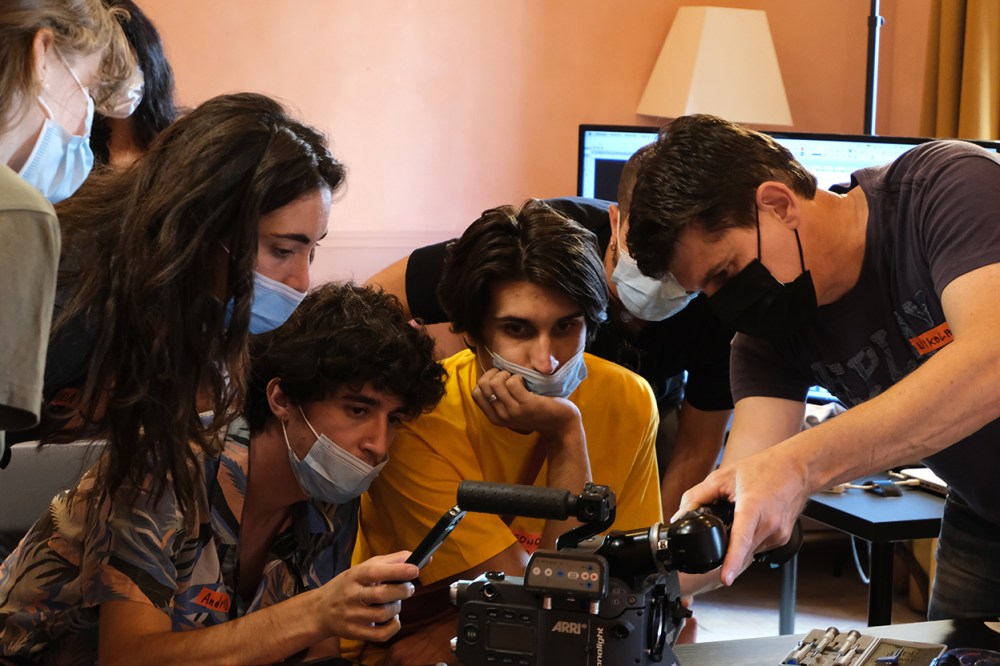
I agree completely. Being taken out of one’s comfort zone is a fundamental part of the experience here, and a big reason why it is so transformative. Terre di Cinema is not designed to protect participants from difficulty; it is designed to confront them with it, in a meaningful and supported way.
It is not easy to come here and, in just a couple ofm weeks, make the short film you have been imagining or dreaming about for months. You work with strict time constraints, a limited amount of film stock, actors who do not natively speak your language, unfamiliar locations, and a crew you have never met before. From a purely rational point of view, none of this should work, and we shouldn’t manage to finish a single film.
And yet, it happens—every year. Each of us reacts differently to pressure and difficulty; everyone brings their own personality, fears, strengths, and limits into the process. That is precisely where something extraordinary takes place. Cinema, in its deepest sense, is born out of uncertainty, trust, and collective effort. When you are pushed beyond what feels comfortable, you are forced to listen more closely, to collaborate more honestly, and to focus on what truly matters.
That, to me, is the beautiful mystery of filmmaking. Terre di Cinema creates the conditions for that mystery to emerge, not by making things easier, but by making them real. And when it works, the result is not just a finished short film, but a profound personal and artistic experience that stays with participants long after they leave. Given the feedback we get and the objective fact that we mostly rely on word of mouth for the promotion of our programme, I’d say that all this does happen quite regularly at Terre di Cinema.
Q: Looking back at these fifteen years, what has been the most difficult moment—and what has been the most beautiful one?
A:
I wouldn’t really speak of “bad” moments, but rather of difficult ones. There have certainly been a few—you can count them on one hand—linked to personal situations that were challenging to face. But if I had to single out one particularly demanding period, it would be the 2021 edition.
That year came after the suspension of the 2020 edition due to the COVID pandemic, and the situation in Italy was still far from fully normalized. We decided to hold the CineCampus in July 2021, because I had assumed, months before, Italy would be open for summer holidays to international travels in that time window. But it was very atypical for us, as our usual windows have always been June or September. Planning the logistics of an event like Terre di Cinema, which requires precise timing and a highly coordinated organization, under pandemic conditions was a real undertaking.
On top of that, July 2021 was exceptionally hot in Catania. During the days of the CineCampus, a devastating fire swept through the city, causing blackouts, interruptions in the water supply, and countless additional complications. It was a moment in which everything seemed to be working against us, and yet we pushed through, collectively, day by day.
As for the most beautiful moment, there isn’t just one. There are countless moments that will remain forever etched in my memory. But if I had to choose, it would be every time a participant has expressed gratitude and genuine joy for the experience they lived here. Hearing someone say, more than once, “At Terre di Cinema I had the most beautiful experience of my life” fills me with immense pride, and also with a deep sense of responsibility. It is in those moments that all the effort, the doubt, and the struggle truly find their meaning.
Q: At the CineCampus of Terre di Cinema, you teach how to shoot on film in a world that is rapidly moving toward generative AI. How do you explain this apparent contradiction?
A:
I don’t see it as a contradiction at all. On the contrary, I believe it brings us back to a central question: the value of human intelligence. By that, I don’t mean intelligence as a technical skill, but as a uniquely human capacity: imagination, intuition, responsibility, sensitivity, ethical judgment, and the ability to give meaning to experience.
I strongly believe that, in the years to come, film will increasingly represent a niche of added value—and a growing one—for several reasons. First, because it embodies intention and consequence: every decision made on set has weight, cost, and responsibility. Nothing is infinite, nothing is reversible at will. That discipline trains awareness, foresight, and authorship in a way that no automated or endlessly malleable system can replace.
Second, film preserves a direct relationship with reality. Light physically touches the negative; time is inscribed materially. In an era where images can be endlessly generated, simulated, or altered, the photochemical image carries with it a trace of the real—a form of visual truth that is increasingly rare and therefore increasingly precious.
Third, film demands collaboration and trust. It reinforces the collective nature of cinema as a human act, not a solitary or algorithmic process. You prepare together, you commit together, and you accept uncertainty together. That experience shapes not only better filmmakers, but more conscious artists.
Finally, as AI becomes more present and powerful, the value of what is deliberately slow, tangible, and human will grow. Film is not about nostalgia; it is about resistance to homogenization. It teaches patience, care, and imagination—the ability to envision something before it exists. These are precisely the qualities that define human intelligence, and the ones most at risk of being forgotten.
At Terre di Cinema, we are not teaching film instead of the future. We are teaching film for the future, as a way to anchor new generations of filmmakers to a deeper understanding of authorship, responsibility, and what it truly means to create images in a world where making images has never been easier, but understanding them has never been more urgent.
Scopri di più da TERRE DI CINEMA - International Cinematographers Days
Abbonati per ricevere gli ultimi articoli inviati alla tua e-mail.
