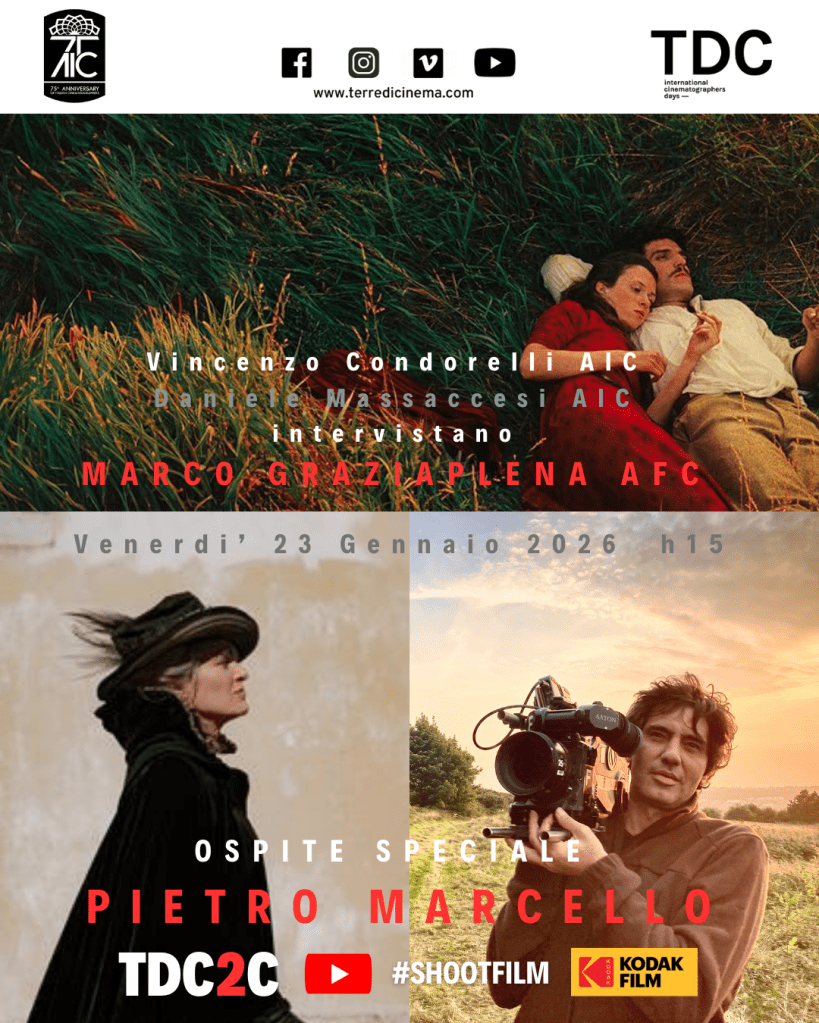
To mark the 15th anniversary of Terre di Cinema, this special episode of TDC2C — Terre di Cinema to Camerabrings together filmmaker Pietro Marcello and cinematographer Marco Graziaplena for a wide-ranging conversation on cinema as a material practice.
Rather than focusing on a single film, the dialogue opens up a broader reflection on the relationship between vision and craft, and on the central role that photochemical film plays in Marcello’s cinema — not as a nostalgic gesture or stylistic signature, but as an artistic, ethical, and political position.
At the heart of the discussion lies the idea that cinema is shaped not only by ideas and narratives, but by limits, discipline, time, and collective work. Film, with its physical presence and resistance, becomes an active force in the creative process, influencing how stories are conceived, shot, and ultimately shared.
The Origins of a Shared Language
Vincenzo Condorelli AIC:
Pietro, Marco, I’d like to start from the beginning — not from a specific title, but from your way of working together. Your films give the impression of a cinema built patiently, through time, through trust, and through a deep attention to the material nature of images. How did this shared language take shape?
Pietro Marcello:
For me, cinema has always been tied to reality — to places, faces, landscapes, and to time passing through them. I never thought of film as something abstract or purely conceptual. When I met Marco, I felt that he shared the same sensitivity: an attention to what is already there, to what exists before we intervene with a camera.
Working together means listening — not only to each other, but to the world around us. Film forces you to do that. It doesn’t allow you to accumulate endlessly; it asks you to choose, to wait, to observe. That discipline shapes the film long before the shoot begins.
Marco Graziaplena:
I think our collaboration is based on a very simple idea: the image must serve the life of the film. We never start from an aesthetic concept imposed from above. We start from the story, from the bodies, from the environment.
Shooting on film reinforces this approach. It slows you down in a productive way. It creates a shared rhythm on set — between director, cinematographer, crew, and actors. Everyone becomes more present, more attentive. The image gains weight because it costs time and care.
Film as Choice, Not Style
Vincenzo Condorelli AIC:
Your commitment to shooting on film is very strong and consistent. Today, this choice is often framed as a stylistic or even nostalgic one. But in your work it feels more radical than that. What does film represent for you?
Pietro Marcello:
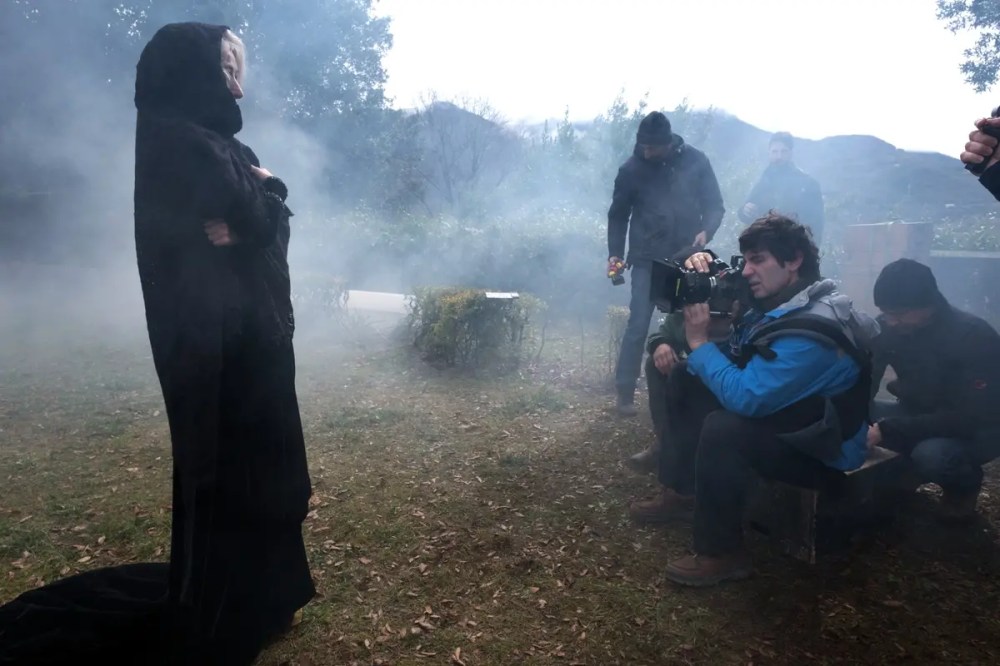
I don’t see film as a style. I see it as a position. Film has a relationship with time that digital doesn’t have in the same way. It records light as a physical trace. That trace carries memory, imperfection, and vulnerability.
Cinema, for me, is not about control. It’s about accepting that something escapes you. Film embraces that uncertainty. It reminds you that images are not infinite, that time is limited, that every shot matters. In a world obsessed with accumulation and speed, this is already a political gesture.
Marco Graziaplena:
There’s also a collective dimension. Film imposes a shared responsibility. When you roll, everyone knows that moment is precious. That awareness changes the atmosphere on set.
Technically, film gives you a depth and a texture that are not just visual qualities — they affect performance, movement, and even silence. But beyond technique, it’s about respect: respect for the image, for the process, and for the people involved.
Limits, Economy, and Collective Responsibility
Vincenzo Condorelli AIC:
One recurring idea in your work is the value of limits, technical, economic, and temporal. In contemporary production, limits are often perceived as obstacles to overcome. In your cinema, they seem to be a generative force. How do you see this relationship?
Pietro Marcello:
Limits are not a problem; they are a language. When everything is possible, nothing is truly necessary. Limits force you to ask essential questions: Why this image? Why now? Why this duration?
Cinema was born within limits, technological, financial, even physical. When those limits disappear, cinema risks losing its sense of urgency. Working with film restores a kind of moral economy: you must decide, you must renounce, you must trust your intuition. That process creates meaning.
Marco Graziaplena:
From a cinematographer’s perspective, limits create clarity. You stop chasing effects and start focusing on relationships, between light and space, between bodies and environment.
Economy is not about scarcity; it’s about precision. On set, this translates into a stronger sense of responsibility. Every department knows that their choices matter. That shared awareness becomes part of the film’s texture.
Cinema as Collective Work
Vincenzo Condorelli AIC:
Your films convey a strong sense of collective authorship. Even though cinema is often discussed in terms of individual vision, your work seems deeply rooted in collaboration.
Pietro Marcello:
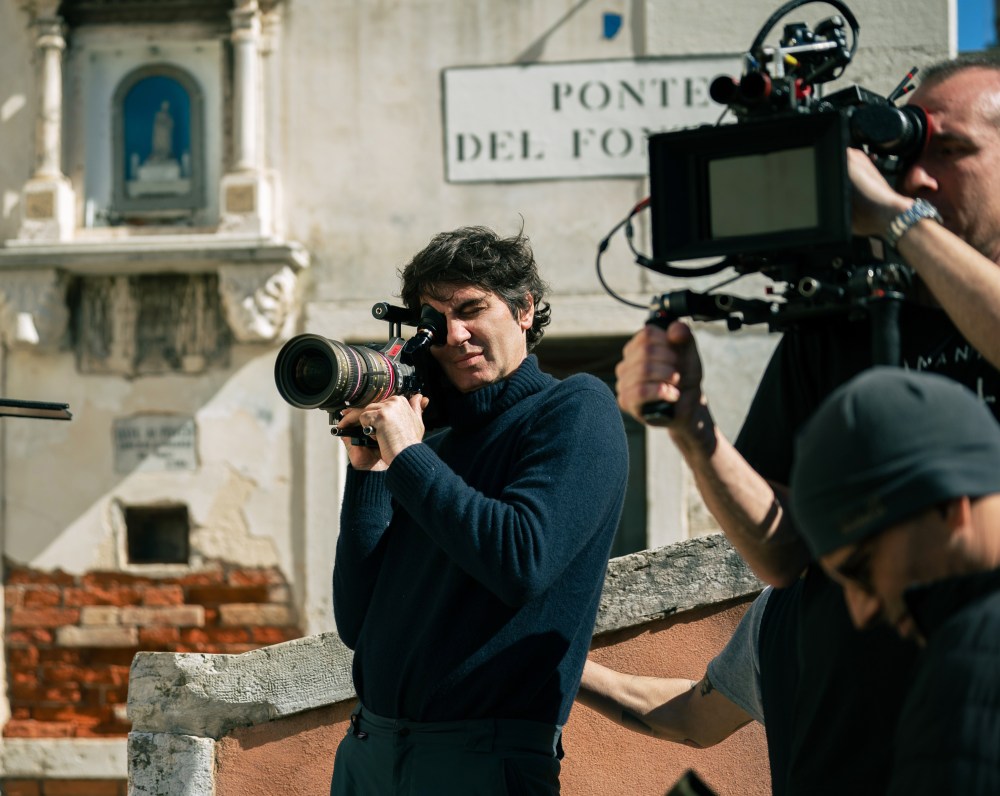
Cinema has never been a solitary art. The myth of the lone author is misleading. Films are made by groups of people who bring their experience, intelligence, and sensitivity into the process.
I’m interested in creating conditions where collaboration can flourish, where people feel involved rather than executed. Film, again, helps this. Because it demands attention and care, it encourages dialogue. You cannot rush through it alone.
Marco Graziaplena:
On a practical level, collaboration means listening. It means allowing space for accidents, for suggestions, for moments that were not planned.
The camera department, the actors, the sound team, everyone contributes to the rhythm of the film. When that rhythm is shared, the image becomes more truthful. You feel that the film is breathing.
Archive, Memory, and the Present Tense
Vincenzo Condorelli AIC:
Archive and memory play a central role in your cinema. Images from the past coexist with contemporary footage, creating a dialogue across time. How do you approach this dimension?
Pietro Marcello:
The archive is not a museum; it’s a living body. Images from the past are not finished, they continue to speak, to change meaning depending on how we look at them today.
I’m interested in using archival material not to illustrate history, but to question it. When you place an old image next to a contemporary one, something happens. Time folds in on itself. The past becomes present again, and the present reveals its fragility.
Marco Graziaplena:
From an image-making point of view, working with archives sharpens your sensitivity. You become aware that every image you create today may become an archive tomorrow.
Shooting on film reinforces this awareness. The material nature of the image gives it durability, but also responsibility. You are not just producing content; you are leaving a trace.
Education, Transmission, and the Future of Cinema
Vincenzo Condorelli AIC:
We’re having this conversation within an educational context, here at Terre di Cinema. What do you think is essential to transmit to younger filmmakers today?
Pietro Marcello:
What matters most is not technology, but attitude. Curiosity, patience, and humility are fundamental. Cinema is not about expressing yourself endlessly; it’s about engaging with the world.
I would encourage young filmmakers to slow down, to look carefully, to accept not knowing everything. Film teaches this better than any manifesto. It forces you to confront time, error, and choice.
Marco Graziaplena:
I would add that learning cinema means learning to work with others. Technique is important, but it comes alive only within relationships.
Understanding light, space, and movement is inseparable from understanding people. Education should create situations where this complexity can be experienced, not simplified.
Closing Reflections
Vincenzo Condorelli AIC:
Listening to you, what emerges strongly is the idea of cinema as an ethical practice, one that involves time, care, and responsibility. In a moment when images are everywhere and endlessly reproducible, this feels more necessary than ever.
Pietro Marcello:
Cinema still matters when it resists. When it refuses to become disposable. When it asks something of those who make it and those who watch it.
Marco Graziaplena:
And when it reminds us that images are not neutral. They are made by hands, by choices, by communities. Film makes this visible.
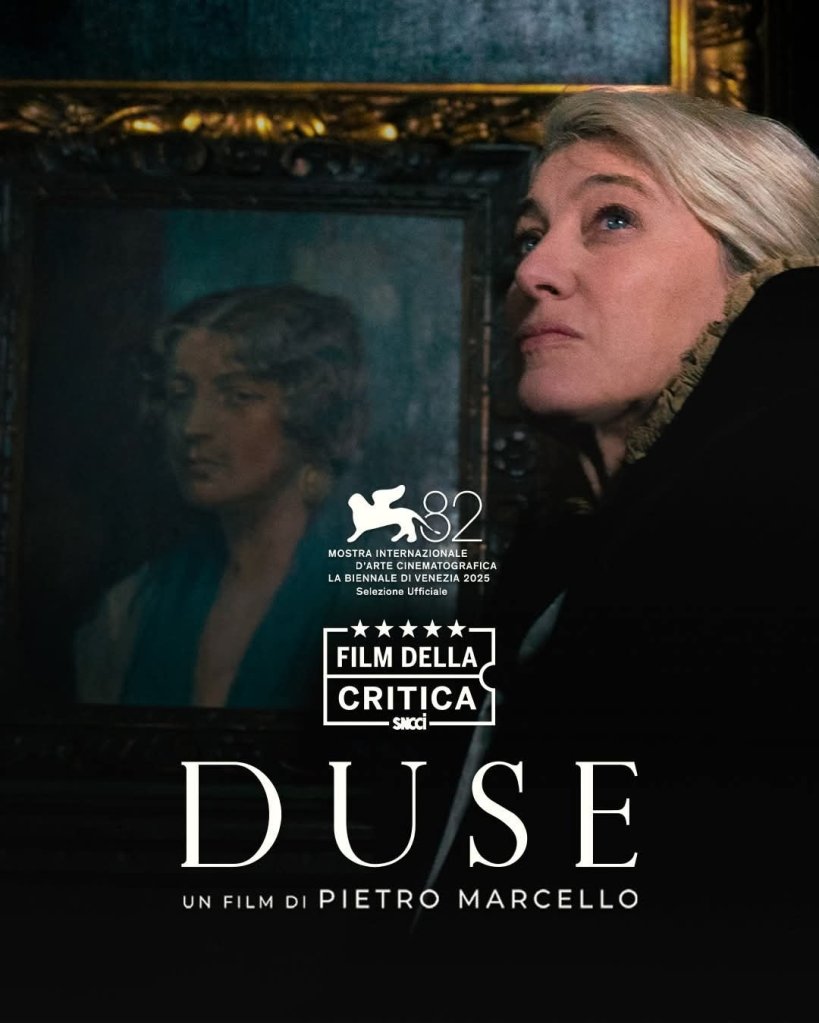
This conversation is part of TDC2C — Terre di Cinema to Camera, the video podcast series dedicated to cinematography, craft, and the material culture of filmmaking. The full video recording is available on the Terre di Cinema website and on the official YouTube channel.
Scopri di più da TERRE DI CINEMA - International Cinematographers Days
Abbonati per ricevere gli ultimi articoli inviati alla tua e-mail.
